

If you have ever tried to buy sleeves online, print custom card art, or figure out whether that “rare” pull in your binder is even real, you have probably run into the same wall: nobody gives you the straight numbers on Pokémon card dimensions. This guide fixes that.
Below, you will find every measurement that matters for Pokémon card dimensions — in inches, millimeters, centimeters, and pixels — plus how those numbers apply to sleeves, printing, authentication, and everyday comparisons you can actually picture.
History of Pokémon Card Dimensions
Pokémon cards didn’t invent their size, they inherited it. When the Pokémon Trading Card Game launched in Japan in 1996, it adopted the same 2.5 x 3.5 inch format that Magic: The Gathering had already made the industry standard a few years earlier. That decision made cross-brand sleeves, binders, and storage boxes possible from day one.
When Pokémon cards hit the US market in 1999, the dimensions carried over unchanged, and they’ve stayed remarkably consistent ever since. Even as artwork, holo patterns, and card text evolved dramatically over 25+ years, the physical footprint never budged, making it one of the most stable specs in the entire trading card industry.
Official Pokémon Card dimensions: The Real Numbers
The Pokémon card dimensions follows the same industry standard used across most trading card games, not something unique to Pokémon. That is 2.5 inches wide by 3.5 inches tall, a footprint shared with Magic: The Gathering, Yu-Gi-Oh!, and most sports cards produced since the 1980s.
That consistency is not an accident. When trading card manufacturers settled on this format decades ago, it made cross-compatible sleeves, binders, and storage boxes possible — a huge deal for an industry built on collecting and trading across brands.
A few extra facts worth knowing about the standard card size:
- Corner radius: roughly 3.5 mm to 4 mm, giving the card its rounded (not sharp) corner look.
- Weight: about 1.9 grams for a standard card, slightly more for holographic or foil variants due to the extra layer.
- Cardstock: printed on a black-core paper stock, which is part of why the “light test” (covered later) works so well for spotting fakes.
None of these numbers vary by set, era, or artwork. Whether you are holding a 1999 Base Set Charizard or a card pulled from a pack last week, the outer dimensions are identical.
Pokémon Card dimensions Across Every Unit
Since sellers, printers, and international buyers all use different measurement systems, here is the full conversion broken out cleanly.
Inches
Pokémon card dimensions in inches come out to 2.5 by 3.5 inches. This is the number you will see most often on US-based storage products, from binder pages to deck boxes, since inches remain the default unit in the American collectibles market.
Centimeters
In centimeters, that is 6.35 cm by 8.89 cm. If you are shopping on a site that lists cm instead of inches (common outside the US), this is the figure to match against your sleeves or toploaders.
Millimeters
Pokémon card dimensions in mm land at 63.5 mm by 88.9 mm. Millimeters give you the most precision, which matters if you are doing anything technical — designing a print template, checking grading tolerances, or 3D-printing a custom card case.
Quick reference table:
| Measurement | Value |
|---|---|
| Width | 63.5 mm / 6.35 cm / 2.5 in |
| Height | 88.9 mm / 8.89 cm / 3.5 in |
| Thickness | 0.30–0.32 mm |
| Corner radius | 3.5–4 mm |
Digital Dimensions: Pixels, DPI, and File Setup
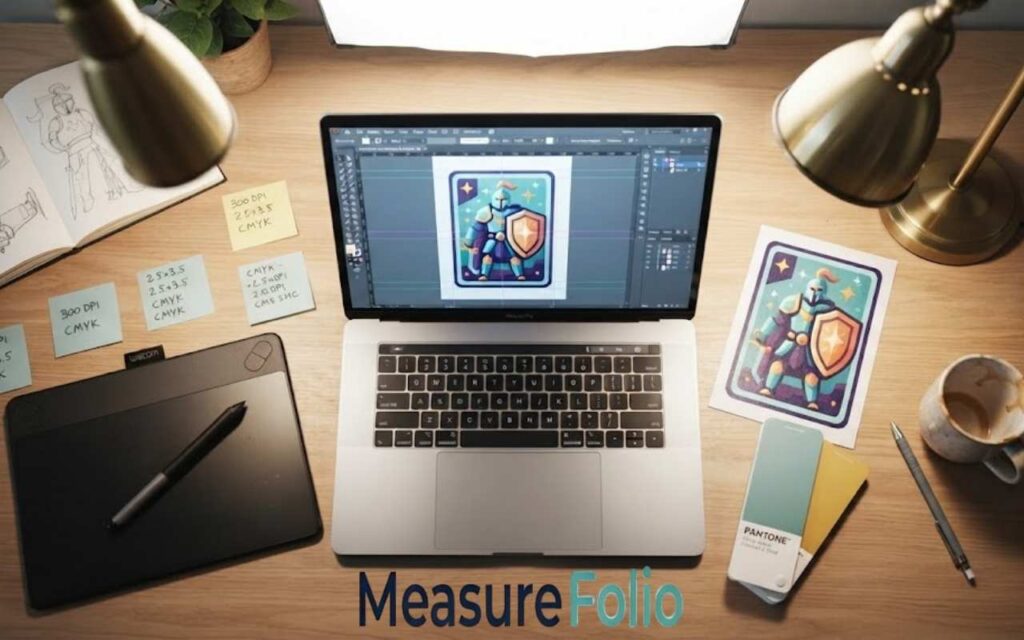
If you are designing card art, building a custom proxy, or setting up a print file, you need pixel dimensions, not inches. This is where Pokémon card dimensions in pixels come in, and the number changes depending on your resolution.
Pixel Dimensions by Resolution
| DPI | Width (px) | Height (px) | Best Used For |
|---|---|---|---|
| 72 DPI | 180 px | 252 px | Web previews, thumbnails |
| 150 DPI | 375 px | 525 px | Basic digital mockups |
| 300 DPI | 750 px | 1050 px | Print-ready files |
| 600 DPI | 1500 px | 2100 px | High-detail professional printing |
For anything you plan to actually print, 300 DPI is the industry minimum. Going lower makes text and fine linework look soft or pixelated once printed at full size.
Print Bleed Size for Pokémon Card Dimensions
If you are sending a design to a print shop, do not design right up to the 750 x 1050 px edge. Add a bleed margin — typically an extra 0.125 inches (about 37 px at 300 DPI) on all sides — so the print does not leave a thin white edge after trimming. Most professional card printers request:
- Trim size: 2.5 x 3.5 in (750 x 1050 px at 300 DPI)
- Bleed size: 2.75 x 3.75 in (825 x 1125 px at 300 DPI)
- Safe zone: keep critical text/art at least 0.125 in inside the trim line
Pokémon Card Dimensions for Procreate
If you are building card art on an iPad, set your Procreate canvas to 750 x 1050 px at 300 DPI for a standard-resolution print file, or bump it to 1500 x 2100 px if you want extra room to zoom and detail without quality loss. Procreate’s canvas limit depends on your device’s RAM, so on older iPads you may need to stick with the smaller size.
Every Pokémon Card dimensions and Variant
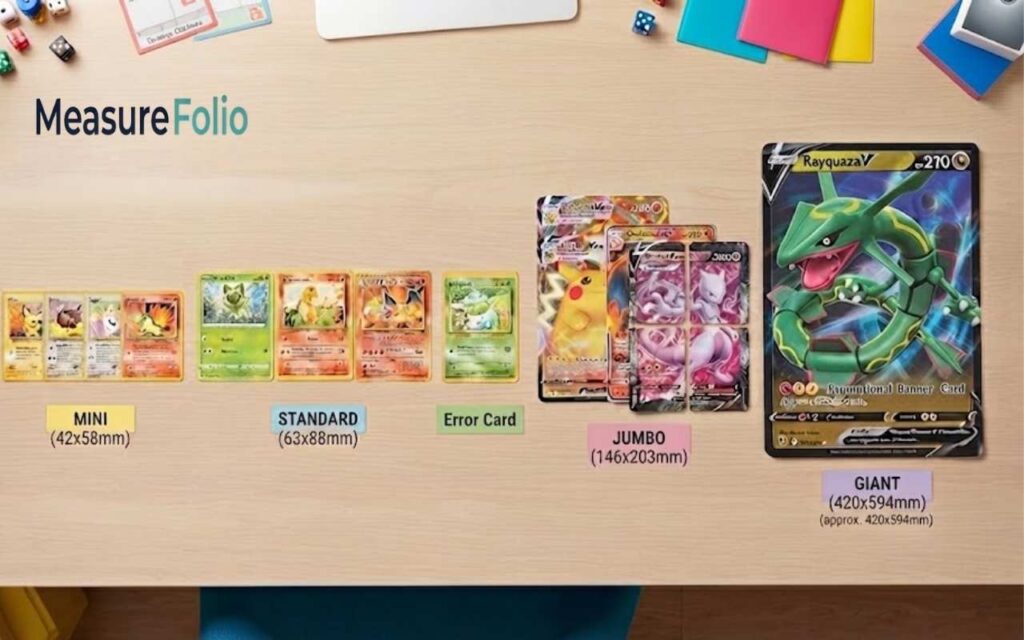
Not every Pokémon card is the same size. While the standard Pokémon card covers the vast majority of what’s in packs, there are several oversized variants worth knowing.
Standard-Size Pokémon Cards Explained
This is what you pull from booster packs, theme decks, and tins. Dimensions: 2.5 x 3.5 in (63.5 x 88.9 mm). This applies across every generation and set, from the original Base Set through the current Scarlet & Violet era.
Jumbo Cards (Oversized Promos)
Jumbo cards are exactly what they sound like — significantly larger versions given away as promotional items, often at events, in special box sets, or as prizes. They are not tournament-legal and exist purely as collectibles or display pieces.
Jumbo XL vs Jumbo L — What Changed in Pokémon Card dimensions
Here is where a lot of confusion happens, because “jumbo” is not one fixed size.
| Card Type | Approx. Dimensions | Era |
|---|---|---|
| Jumbo XL | 6.4 x 8.9 in | Pre-2019 |
| Jumbo L | 5 x 7 in | 2020 and after |
Around 2019–2020, Pokémon’s printer shifted to a smaller jumbo standard. If you are buying sleeves for a jumbo card, always check whether it is an older XL-era card or a newer L-era one — using the wrong sleeve size on either will leave the card loose or too tight.
Box Topper Cards
These sit between standard and jumbo size, usually measuring around 3.5 x 5 inches, and come packed on top of special collection boxes rather than inside booster packs. They need their own sleeve size, since neither standard nor jumbo sleeves fit properly.
CoroCoro Oversized Cards
CoroCoro cards are a rarer Japan-exclusive category, tied to the CoroCoro Comic magazine. These have appeared in a few different oversized formats over the years, generally larger than standard but smaller than the XL jumbo cards, and are considered highly collectible due to their limited print runs.
Putting the Size in Perspective: Everyday Object Comparisons
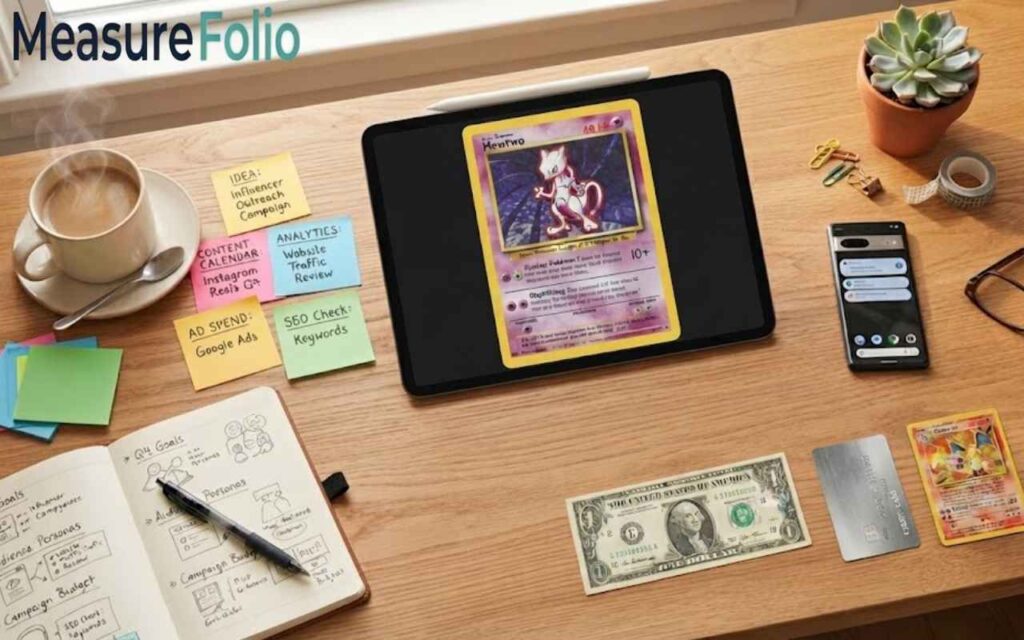
Numbers on a page do not always click. Here is how the Pokémon card size stacks up against things you probably have sitting nearby right now.
1. Compared to a Credit Card
A credit card measures 3.37 x 2.13 inches — noticeably smaller and more rectangular than a Pokémon card. Line them up side by side and the Pokémon card looks taller and narrower.
2. Compared to a Dollar Bill
A US dollar bill measures 2.61 x 6.14 inches — much longer but narrower. A Pokémon card is roughly the width of a dollar bill but a little over half its length.
3. Compared to a Standard Playing Card
This one is nearly identical. A standard poker-size playing card is also 2.5 x 3.5 inches, meaning your Pokémon cards will fit in the exact same box, sleeve, or card holder as a deck of playing cards.
4. Compared to a Smartphone Screen
Most modern smartphones run around 2.8 to 3.1 inches wide, so a Pokémon card is slightly narrower than the average phone screen but close in overall footprint — a helpful way to visualize the size if you do not have a card handy.
5. Compared to a Sticky Note
A standard sticky note is 3 x 3 inches, so it is a touch shorter but wider than a Pokémon card. Stack one on top of a card and you will see the note hangs over the sides slightly while falling short of the top.
Do Japanese and English Pokémon Cards Differ in Size?
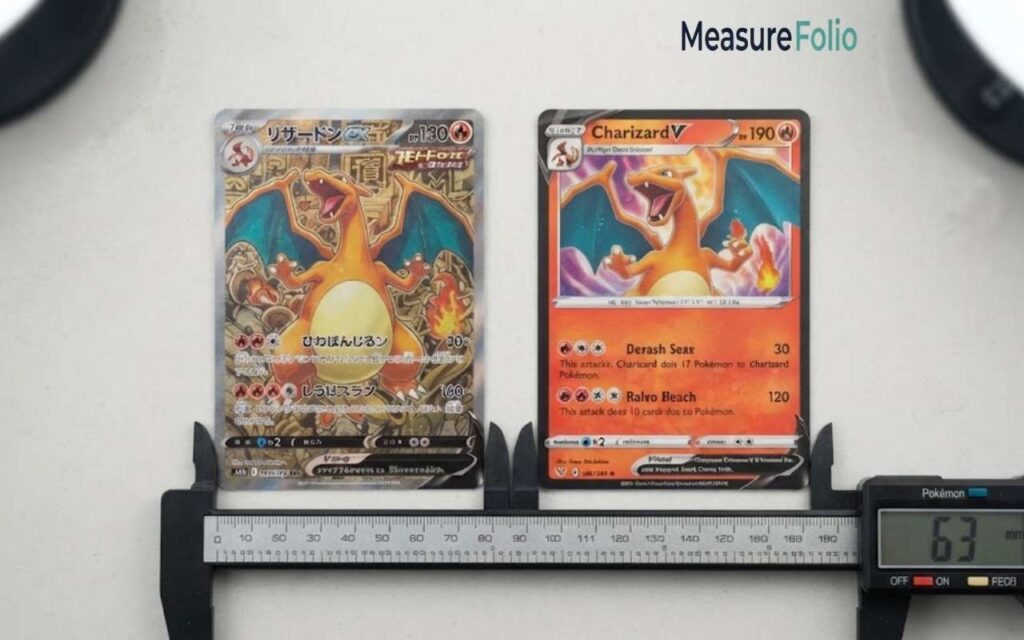
Short answer: no. Japanese Pokémon cards share the exact same 63.5 x 88.9 mm dimensions as English and other international releases. This is a common myth, likely because Japanese cards often feel different in hand.
That sensation comes down to a few real differences that have nothing to do with size:
- Cardstock texture: Japanese cards use a slightly glossier, thinner-feeling stock.
- Corner rounding: some collectors report Japanese cards feel marginally more rounded, though this varies by print run.
- Sleeve fit: because of the texture difference, some sleeves designed for English cards feel a bit looser or tighter on Japanese cards, even though the physical dimensions match.
If you are mixing Japanese and English cards in the same binder or box, you will not run into any size compatibility issues — the dimensions are identical across regions.
Pokémon Card vs Other TCGs
Since trading card dimensions are largely standardized, most major games line up closely — but not perfectly.
| Card Game | Width | Height |
|---|---|---|
| Pokémon TCG | 2.5 in | 3.5 in |
| Magic: The Gathering | 2.5 in | 3.5 in |
| Yu-Gi-Oh! | 2.36 in | 3.46 in |
| Standard Sports Cards | 2.5 in | 3.5 in |
The standout here is Yu-Gi-Oh!, which runs slightly smaller than the rest. This is why Yu-Gi-Oh! sleeves are a distinct product category — a standard Pokémon or MTG sleeve will fit loosely on a Yu-Gi-Oh! card, letting it slide around inside.
Good to know: If you collect across multiple games, do not assume “trading card sleeves” are one-size-fits-all. Always check the listed dimensions before buying in bulk.
Matching Sleeves, Toploaders, and Storage to Card Size
Getting Pokémon card sleeves and storage right is not just about tidiness — a poor fit can actually damage cards over time through friction or bending.
Penny Sleeve Dimensions
Standard penny sleeves measure around 2.5 x 3.5 inches, matching the card exactly for a snug, minimal-bulk fit. These are the cheapest option and typically used as a first layer before a toploader or binder page.
Perfect-Fit Sleeve Dimensions
Perfect fit sleeves run slightly smaller, roughly 2.53 x 3.54 inches, and are designed to hug the card tightly with almost no wiggle room. Collectors often double-sleeve — perfect fit sleeve first, penny sleeve over that — for extra protection without adding much bulk.
Toploader Sizes (Standard, Thick, Jumbo)
| Toploader Type | Fits |
|---|---|
| Standard (3×4 in) | Single sleeved standard card |
| Thick (35pt–130pt) | Multiple stacked cards or graded submissions |
| Jumbo Toploader | Jumbo L or Jumbo XL cards |
Binder Page Compatibility
Standard 9-pocket binder pages are built around the same 2.5 x 3.5 inch dimension, so any standard card fits without modification. Jumbo and Box Topper cards need specialty pages, since they will not fit in a standard 9-pocket layout at all.
Using Dimensions to Spot a Fake Card
Counterfeit cards have gotten more convincing over the years, but fake Pokémon cards almost always fail on precise measurements, even when the artwork looks close to perfect.
1. Width and Height Tolerance in Pokémon Card Dimensions
Genuine cards stay extremely close to 63.5 x 88.9 mm, typically within a fraction of a millimeter. Fakes often run slightly oversized or undersized, sometimes by 1–2 mm, which is enough to feel “off” in a sleeve.
2. Thickness Test for Pokémon Card Dimensions
Pokémon card thickness should sit around 0.30–0.32 mm per card. Counterfeits are frequently either noticeably thinner (flimsy, bends too easily) or thicker (feels stiff, does not shuffle naturally).
3. Weight Test for Standard Pokémon Cards
A stack of 10 genuine cards should weigh close to 19 grams. If you have a gram scale, this is one of the fastest checks available — fakes often weigh 10–20% off from genuine stock.
4 Corner Roundness on a Standard Card Size
Authentic cards have a consistent, machine-cut corner radius. Fakes cut by hand or with cheaper equipment often show slightly uneven or sharper corners when compared side-by-side with a known genuine card.
5. Flashlight/Light-Through Test
Hold the card up to a bright light. Genuine Pokémon cards have a black-core layer that blocks most light from passing through, showing only a thin blue-ish line around the edge. Fakes, which typically use white-core stock, let noticeably more light through the entire card.
How to Measure a Card at Home Without Calipers
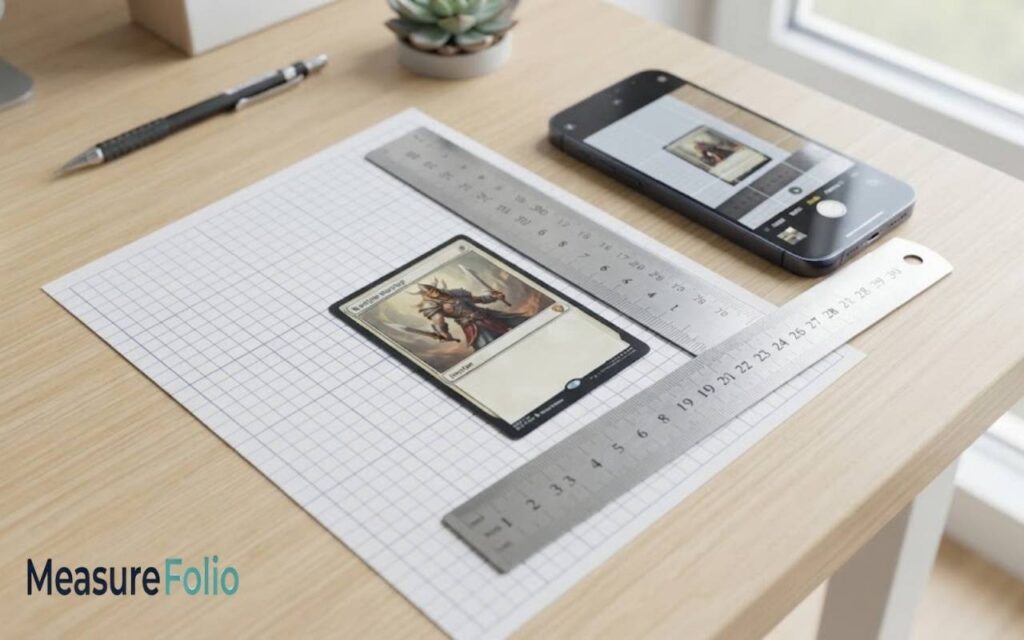
You do not need professional tools to get a reasonably accurate reading:
- Use a standard printer paper sheet — 8.5 x 11 inches — as a reference; a Pokémon card should span almost exactly a quarter of the short side.
- Use a smartphone measuring app with AR capability; modern iPhones and Android phones can measure to within a millimeter or two.
- Trace the card onto graph paper and count the squares if your paper has a known grid size (like 5 mm squares).
- Compare directly against a known genuine card — if you already own one verified card, lining it up against a questionable one is often the fastest gut check.
None of these replace digital calipers for precision work, but they are accurate enough for casual authentication or sleeve shopping.
Pokémon Card Dimensions Quiz
1. What is the height of a standard Pokémon card in inches?
A) 3 in B) 3.5 in C) 4 in D) 2.5 in
2. At 300 DPI, what pixel dimensions should a print-ready card canvas be?
A) 375 x 525 px B) 750 x 1050 px C) 180 x 252 px D) 1500 x 2100 px
3. What is the approximate weight of a single standard Pokémon card?
A) 0.5 grams B) 1.9 grams C) 5 grams D) 3.2 grams
4. Which card size sits between standard and jumbo, used on special collection boxes?
A) CoroCoro card B) Jumbo XL card C) Box Topper card D) Perfect fit card
5. What is the corner radius of a standard Pokémon card?
A) 1–2 mm B) 3.5–4 mm C) 6–7 mm D) 10 mm
6. Which everyday item is closest in size to a Pokémon card?
A) A dollar bill B) A standard playing card C) A sticky note D) A credit card
Answers
- B — 3.5 in
- B — 750 x 1050 px
- B — 1.9 grams
- C — Box Topper card
- B — 3.5–4 mm
- B — A standard playing card
Final Takeaway
The Pokémon card dimensions you already know from handling packs — 2.5 x 3.5 inches, or 63.5 x 88.9 mm — holds true across nearly every card you will ever pull, regardless of set, year, or region. The exceptions (jumbo, Box Topper) are easy to spot once you know what to look for, and getting the dimensions right matters far more than most collectors realize: it is the difference between a card that fits its sleeve properly and one that slowly gets damaged from a bad match.
Whether you are buying storage, designing a print file, or double-checking a suspicious pull, the numbers in this guide are the ones to trust.
FAQs about Pokémon Card Dimensions
Got a few more questions about Pokémon card dimensions? Here are quick, straight-to-the-point answers.
1. Do Pokémon cards shrink or warp over time?
Slight warping can happen from humidity or heat exposure, but a properly stored card (sleeved, kept flat, away from direct sunlight) won’t measurably shrink or change dimensions even after decades.
2. Is there a size difference between first edition and unlimited print cards?
No — the “1st Edition” stamp refers to print run and rarity, not size. Both first edition and unlimited cards share the same 2.5 x 3.5 inch dimensions.
3. Can I use Pokémon card dimensions for other TCG proxies or custom prints?
Yes, since the standard 2.5 x 3.5 inch (63.5 x 88.9 mm) format is shared across most trading card games, the same print template works for Magic, sports cards, and most other TCGs — just double-check Yu-Gi-Oh!, which runs slightly smaller.

I’m Adam Davis, your go-to author for all things related to dimensions here at Measure Folio. I believe that understanding size, scale, and space shouldn’t be complicated. My goal is to break down complex dimensional concepts into clear, actionable articles so you can stop guessing and start planning with absolute certainty.
Hi! Do you use Twitter? I’d like to follow you if that would be ok.
I’m absolutely enjoying your blog and look forward to new posts.
Thanks so much for reading! I don’t actually use Twitter, but I’d love to stay connected over on Facebook.
An outstanding share! I’ve just forwarded this onto a co-worker
who was doing a little research on this. And he in fact ordered me breakfast
because I discovered it for him… lol. So allow me to reword this….
Thanks for the meal!! But yeah, thanks for spending the time
to talk about this subject here on your website.
You’re very welcome! I’m glad it helped.