

If you have ever tried to jam a tall Red Bull into a car cup holder that clearly was not built for it, you already know that can size matters more than people think. Whether you are stocking a vending machine, designing packaging, building a fridge layout, or just settling a bar bet about Red Bull dimension, the exact numbers matter.
This guide breaks down every official Red Bull can dimension, gives you real measurements in inches, centimeters, and millimeters, and shows you how these cans stack up against the competition.
A Quick History of the Red Bull Can

Red Bull launched in 1987 with just one size: the 8.4 fl oz (250 mL) slim can, a shape inspired by an existing Thai energy tonic called Krating Daeng. That narrow, tall silhouette was a deliberate break from the short, wide soda cans dominating shelves at the time, and it became part of the brand’s identity from day one.
As Red Bull expanded into the US and other markets through the 1990s and 2000s, demand for bigger servings led to the 12, 16, and 20 fl oz sizes. Rather than widen the can, Red Bull kept stretching it taller, staying true to that original slim-can look across every size it has ever released.
Red Bull Dimension at a Glance
Short on time? Here is the fast version. These are the four official Red Bull can sizes sold across most markets.
Beyond height and diameter, a full picture of Red Bull can dimensions should include weight and rough circumference too, since those numbers matter for shipping, vending machines, and recycling calculations.
| Size | Volume (mL) | Height | Diameter | Circumference | Empty Weight |
|---|---|---|---|---|---|
| 8.4 oz | 250 mL | 5.3 in / 134 mm | 2.1 in / 54 mm | 6.7 in / 170 mm | ~9 g |
| 12 oz | 355 mL | 6.2 in / 157 mm | 2.6 in / 66 mm | 8.2 in / 207 mm | ~13 g |
| 16 oz | 473 mL | 6.9 in / 175 mm | 2.6 in / 66 mm | 8.2 in / 207 mm | ~15 g |
| 20 oz | 591 mL | 7.7 in / 196 mm | 2.6 in / 66 mm | 8.2 in / 207 mm | ~17 g |
Notice something interesting here. The 12, 16, and 20 oz cans all share roughly the same diameter. Red Bull does not make its cans wider as volume goes up. It makes them taller instead. That is a deliberate design choice, and we will get into why below.
Breaking Down Each Red Bull Can Size
Not every can serves the same purpose. Here is what each one is actually made for.
8.4 fl oz (250 mL) — The Original Size

This is the can that started it all back in 1987. It is the standard Red Bull can most people picture when they hear the brand name: short, narrow, and instantly recognizable on a gas station shelf. At roughly 5.3 inches tall with a 2.1-inch diameter, it is genuinely one of the slimmest beverage cans on the market. It is still the go-to size in Europe, and it is the one most commonly used in single-serve fridges and hotel minibars.
12 fl oz (355 mL)
This is the size most American convenience stores treat as the “regular” Red Bull. It holds 50% more liquid than the original but keeps that same slender profile by adding height instead of width. If you have noticed a 12 oz Red Bull looks taller and thinner than a 12 oz soda can, you are not imagining it. Standard soda cans are wider and shorter for a reason we will explain in the comparison section.
16 fl oz (473 mL)
Often nicknamed the “Grande” by fans, this is the size favored by gamers, students, and anyone pulling an all-nighter. It matches the classic beer tallboy in volume, and its height makes it stand out in a cooler full of shorter cans.
20 fl oz (591 mL)
The largest official format, typically stocked in bulk retail settings like Costco or large grocery chains. This can holds nearly two and a half times the liquid of the original 8.4 oz can while keeping the same body width, which makes it noticeably top-heavy compared to shorter cans.
Height, Diameter, and Circumference — The Exact Measurements
Now for the numbers you came for. The sections below cover height, diameter, and circumference in inches, centimeters, and millimeters, so you can grab the exact figure without doing any math.
How Tall Is Each Can (in inches, cm, mm)

Here is a direct comparison of Red Bull can height across every size, since this is usually the first number people search for.
- 8.4 oz: 5.3 in / 13.4 cm / 134 mm
- 12 oz: 6.2 in / 15.7 cm / 157 mm
- 16 oz: 6.9 in / 17.5 cm / 175 mm
- 20 oz: 7.7 in / 19.6 cm / 196 mm
Diameter and Circumference Explained
Red Bull can diameter stays remarkably consistent once you move past the original size. The 8.4 oz can measures around 2.1 inches (54 mm) across, while every larger size holds steady at about 2.6 inches (66 mm). To find the Red Bull can circumference, you multiply the diameter by pi (3.14159). So for the 8.4 oz can:
2.1 in × 3.14 ≈ 6.7 inches of circumference
For the larger sizes:
2.6 in × 3.14 ≈ 8.2 inches of circumference
Why the Slim Can Shape Matters
Red Bull’s entire brand identity leans on that narrow, elongated silhouette. It is not just aesthetics. A slimmer can fits into more places, from tight backpack pockets to bike-frame cages, and it visually separates Red Bull from wider soda cans on a crowded shelf. That shape is basically part of the logo at this point.
How to Measure a Red Bull Can Yourself
Do not have a ruler handy? Here is how to get accurate numbers with things you probably already own.
Measuring Height Correctly
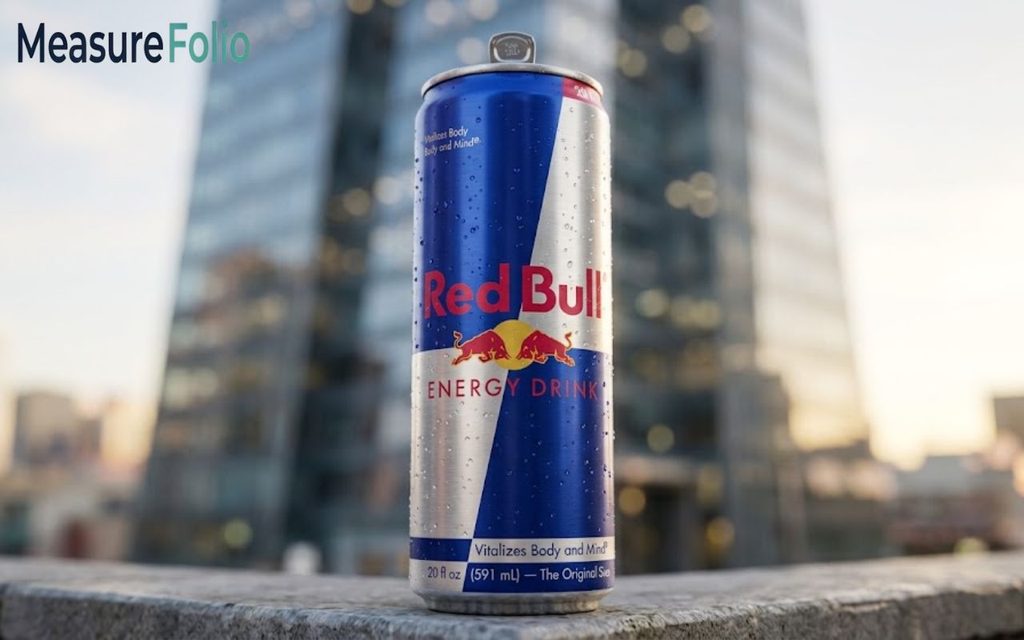
Stand the can upright on a flat surface. Measure straight up from the bottom rim to the top of the lid, not including the little pull tab. A phone case, a credit card stack, or a kitchen ruler all work fine for this.
Measuring Diameter Without a Caliper
Lay the can on its side. Measure across the widest part of the body, which sits near the top where the can curves inward toward the lid. Avoid measuring at the very bottom, since the base is often slightly narrower than the body.
Common Measuring Mistakes to Avoid
- Measuring over the pull tab instead of the flat lid surface
- Measuring diameter at the base instead of the widest point
- Forgetting that dented or well-worn cans will not give you accurate numbers
- Mixing up radius and diameter (radius is just half the diameter)
Putting the Red Bull Dimension in Perspective
Numbers on a page do not always click until you compare them to something familiar. Here is how Red Bull cans stack up against everyday objects:
- An 8.4 oz Red Bull can is roughly the height of an average smartphone standing on end.
- The 12 oz can is close to the length of a standard dollar bill (6.14 inches) laid vertically.
- A 20 oz can is about as tall as a standard sheet of paper is wide, if you rotated the paper sideways.
- Every Red Bull can, regardless of size, is thinner around than a standard soup can.
Will It Fit? Practical Compatibility Checks
Knowing a can’s size is one thing, but knowing where it actually fits is another. These quick checks show how Red Bull cans handle everyday spaces like cup holders, vending machines, and lunch boxes.
Cup Holders and Car Doors
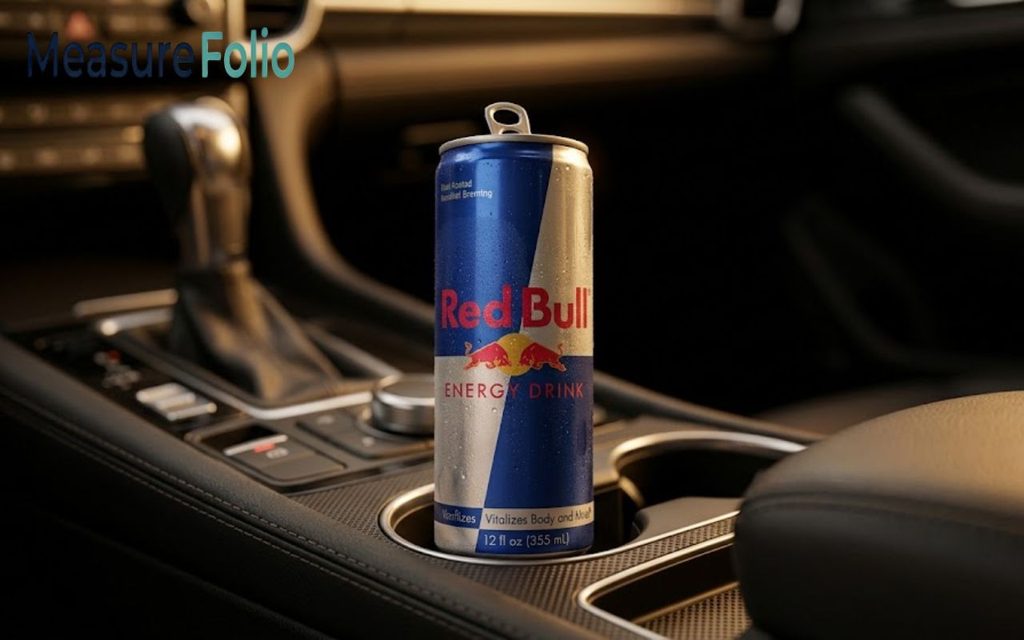
Most modern car cup holders comfortably fit anything up to about 2.7 inches in diameter, which means every Red Bull can size should slide in fine. Older cars with narrower cup holders, however, can sometimes struggle with the taller 16 or 20 oz cans simply because of how much they lean once seated.
Vending and Retail Coolers
Vending machines built for standard 12 oz soda cans usually accommodate Red Bull’s 12 oz size without modification, since the diameters are close enough. The 16 and 20 oz sizes sometimes need adjusted coil spacing, which is why not every vending machine stocks the larger formats.
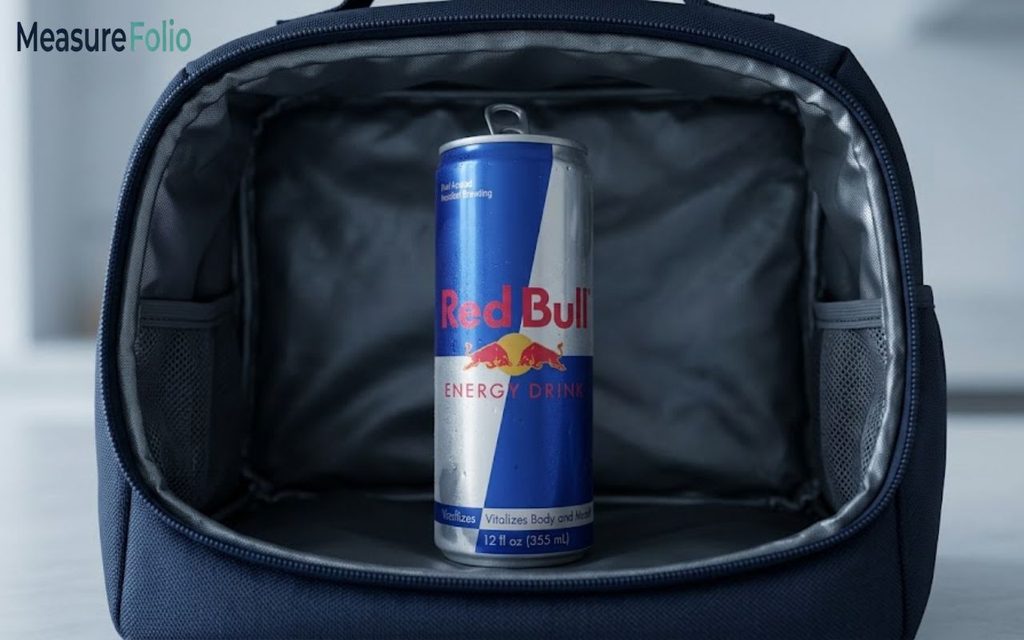
Lunch Boxes, Mini-Fridges, and Bags
The 8.4 oz can remains the easiest size to pack into a lunch box or a small dorm fridge. If storage space is tight, that original slim can is almost always your best bet.
Red Bull dimension vs. Monster: Size and Capacity Compared
People searching Red Bull vs Monster usually want a straight numbers comparison, so here it is.

| Feature | Red Bull 16 oz | Monster 16 oz |
|---|---|---|
| Height | 6.9 in / 175 mm | 6.5 in / 165 mm |
| Diameter | 2.6 in / 66 mm | 2.6 in / 66 mm |
| Volume | 473 mL | 473 mL |
| Shape | Tall and narrow | Slightly shorter, similar girth |
Even at matching volume, Red Bull’s can tends to run a touch taller than Monster’s equivalent size, largely because of that brand-defining slim profile Red Bull has used since day one.
Can Material, Weight, and Recyclability
Every Red Bull can is made from recyclable aluminum, typically coated on the inside with a thin protective lining to prevent the drink from reacting with the metal. Weight scales predictably with size:
- 8.4 oz can: approximately 9 grams empty
- 12 oz can: approximately 13 grams empty
- 16 oz can: approximately 15 grams empty
- 20 oz can: approximately 17 grams empty
Aluminum cans are among the most recycled beverage containers in the world, and unlike glass or certain plastics, aluminum can be recycled indefinitely without losing quality. If sustainability matters to you, tossing that empty Red Bull can in the recycling bin actually does make a measurable difference over time.
Quick Quiz: Test Your Red Bull dimension
Think you’ve got the numbers down? Try these five questions, then check your answers at the end to see how you did. (Use this line if each quiz question is an H3.)
Knowledge
1. What is the height of the original 8.4 oz Red Bull can?
A) 4.8 inches
B) 5.3 inches
C) 6.2 inches
D) 6.9 inches
2. Which measurement stays roughly the same across the 12, 16, and 20 oz Red Bull cans?
A) Height
B) Weight
C) Diameter
D) Circumference of the lid only
3. What material are all standard Red Bull cans made from?
A) Tin-coated steel
B) Recyclable aluminum
C) BPA-based plastic
D) Glass with a metal cap
4. Approximately how much does an empty 16 oz Red Bull can weigh?
A) 9 grams
B) 13 grams
C) 15 grams
D) 22 grams
5. Compared to a Monster 16 oz can, how does the Red Bull 16 oz can typically compare in height?
A) Red Bull is shorter
B) Red Bull is slightly taller
C) They are never the same diameter
D) Monster is always double the height
Answers:
- B) 5.3 inches
- C) Diameter
- B) Recyclable aluminum
- C) 15 grams
- B) Red Bull is slightly taller
final takeaway
Red Bull keeps things refreshingly simple: four sizes, one consistent shape philosophy, and a can that gets taller instead of wider as the volume goes up. The original 8.4 oz can remains the smallest and most iconic at about 5.3 inches tall, while the 12, 16, and 20 oz versions all share a 2.6-inch diameter and just keep stretching upward.
That slim, elongated profile is not an accident either, since it is part of what makes Red Bull instantly recognizable next to wider cans like Monster on a shelf. And whichever size ends up in your hand, it is fully recyclable aluminum, so tossing the empty can in the bin actually counts for something.
FAQs about Red Bull Dimension
Still curious about Red Bull cans? These quick answers cover the questions people ask most, from full-can weight to glass bottle options.
1. How much does a full Red Bull can weigh compared to an empty one?
A full 8.4 oz can weighs roughly 260 grams once you account for the liquid, versus just 9 grams empty. The liquid itself makes up almost the entire weight, since aluminum cans are designed to be as light as possible without sacrificing strength.
2. Are Red Bull cans BPA-free?
Yes. Red Bull has stated its cans use a BPA-free internal lining, a shift the broader beverage industry made over the past decade in response to consumer health concerns about that chemical leaching into food and drinks.
3. Why does Red Bull use a can instead of a bottle?
Aluminum cans chill faster than glass or plastic, block out light that can degrade the drink’s ingredients, and weigh less for shipping. For a caffeinated, carbonated product meant to be grabbed cold and consumed fast, the can format simply performs better on every practical front.
4. Does the shape of the can affect how carbonated Red Bull tastes?
Not directly, but the narrow opening does slow the rate of carbonation loss once the can is opened, compared to a wider-mouthed container. That’s part of why Red Bull tends to stay fizzy a bit longer after cracking it open than some wider-format drinks.
5. Can you buy Red Bull in glass bottles instead of cans?
In select markets, yes. Red Bull has offered small glass bottle formats in some regions and in specialty retail settings, though the aluminum can remains the primary and far more widely distributed format worldwide.

I’m Adam Davis, your go-to author for all things related to dimensions here at Measure Folio. I believe that understanding size, scale, and space shouldn’t be complicated. My goal is to break down complex dimensional concepts into clear, actionable articles so you can stop guessing and start planning with absolute certainty.