

Ever grabbed a can of Coke and wondered exactly how tall it is, or why it fits so perfectly in your cup holder? You’re not alone. Whether you’re designing packaging, building a 3D model, planning a vending machine, or just settling a bet with a friend, knowing the exact Coke can dimensions matters more than you’d think.
This guide breaks down every Coke can size on the market today, from the tiny mini can to the tallboy, with real measurements you can actually use.
Quick Reference: Coke Can Sizes at a Glance

Here’s the short version for anyone who just needs the numbers fast.
| Can Type | Volume | Height | Body Diameter | Lid Diameter |
|---|---|---|---|---|
| Mini Can | 7.5 oz (222 mL) | 4.2″ (10.7 cm) | 2.13″ (5.4 cm) | 2.06″ (5.2 cm) |
| Standard 12 oz Coke can | 12 oz (355 mL) | 4.83″ (12.3 cm) | 2.6″ (6.6 cm) | 2.06″ (5.2 cm) |
| Slim Coke Can | 12 oz (355 mL) | 6.125″ (15.6 cm) | 2.13″ (5.4 cm) | 2.06″ (5.2 cm) |
| Tall Boy Can | 16 oz (473 mL) | 6.2″ (15.7 cm) | 2.6″ (6.6 cm) | 2.06″ (5.2 cm) |
| Large Can | 20 fl oz (591 mL) | 7.5″ (19 cm) | 2.6″ (6.6 cm) | 2.06″ (5.2 cm) |
| Australian Standard | 375 mL (12.7 oz) | 4.96″ (12.6 cm) | 2.6″ (6.6 cm) | 2.06″ (5.2 cm) |
| European Standard | 330 mL (11.2 oz) | 4.75″ (12.1 cm) | 2.6″ (6.6 cm) | 2.06″ (5.2 cm) |
Keep this table bookmarked. It covers most soda can dimensions questions before you even need to scroll further.
The Standard 12 fl oz Can — Height, Width & Volume Explained

The standard Coke can is the one most people picture when they hear “soda can.” It holds 12 oz (355 mL) and measures roughly 4.83 inches tall with a body diameter of 2.6 inches. The lid diameter, sometimes called the “202 end,” measures closer to 2.06 inches, which is noticeably narrower than the body.
That narrowing isn’t an accident. It’s a manufacturing decision that saves aluminum while keeping the can strong enough to handle internal pressure, which can reach up to 90 psi once it’s carbonated and sealed.
An empty standard Coke can weighs around 0.5 ounces (roughly 14 grams). Full, it weighs about 13 ounces. That’s a lot of engineering packed into something you crush and toss in the recycling bin without a second thought.
How the Can’s Shape Affects Its Capacity
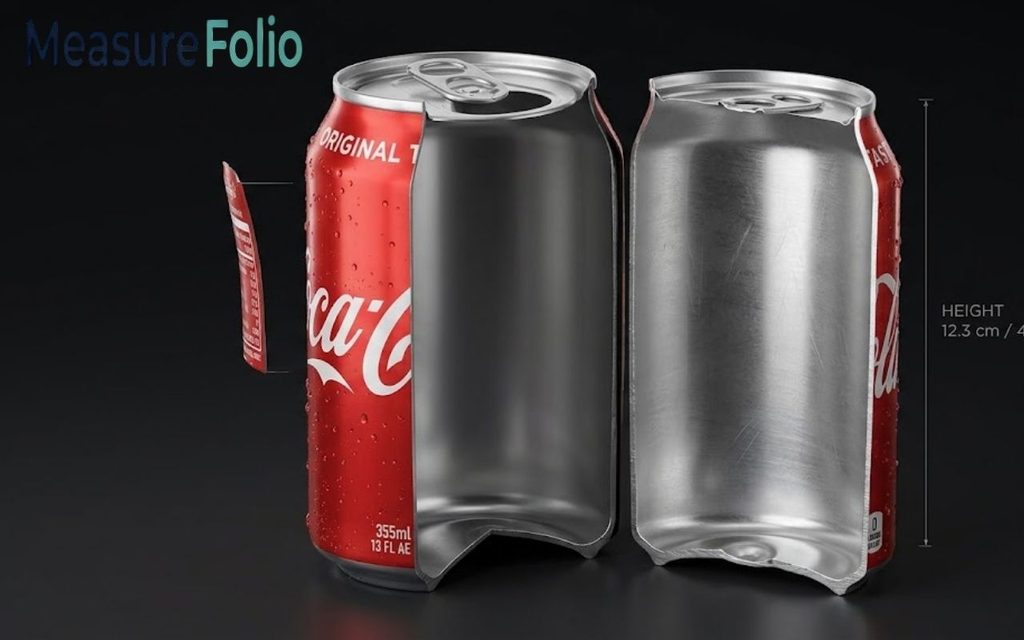
Every Coke can starts as a flat aluminum disc. Manufacturers use a process called drawing and ironing to stretch that disc into a cylindrical body, then a necking press pulls the top inward to create the smaller lid opening. This step, called necking, is why the body diameter and lid diameter aren’t the same number. Less metal at the top means less material cost — multiplied across billions of cans, that adds up fast.
Full Lineup: Mini, Standard, Tallboy & Bulk Can Sizes
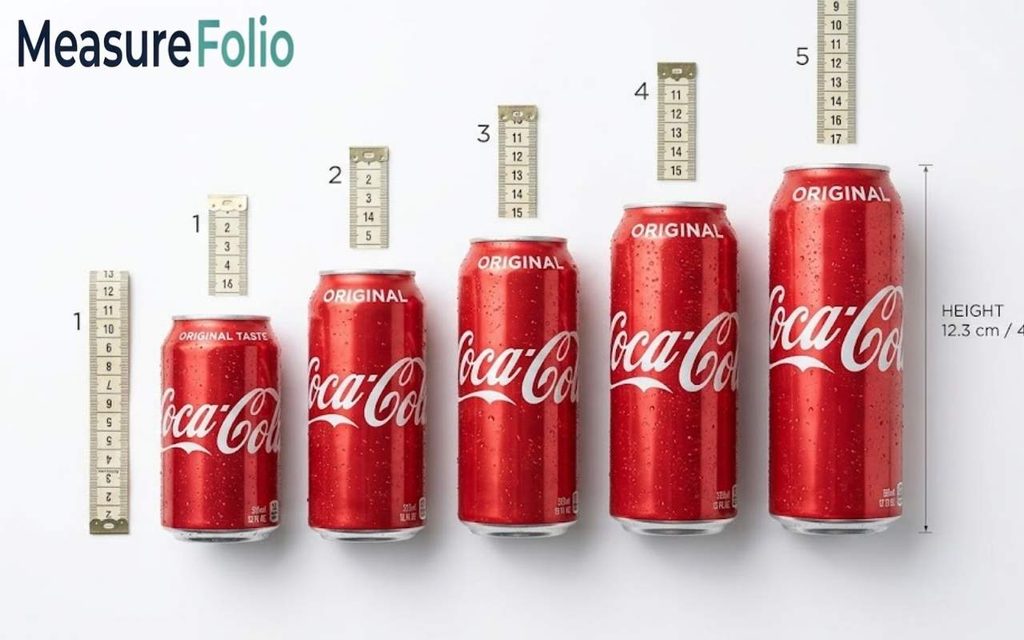
Coke doesn’t just come in one size. Here’s how the full lineup breaks down:
- Mini Coke can (7.5 oz): A compact can built for portion control, popular with parents and dieters. Standing at 4.2 inches tall, it’s noticeably shorter than the standard can.
- Standard 12 oz Coke can: The classic. Found in nearly every vending machine and fridge pack across the United States.
- Slim Coke can (12 oz): Same volume as the standard can, but taller and narrower at 6.125 inches. Originally designed for energy drinks, the slim soda can shape later became popular for Diet Coke and other lighter beverages because it feels more premium in hand.
- Tall boy can (16 oz): At 6.2 inches, this large Coke can format is common at gas stations and convenience stores for people who want more per purchase.
- 375 mL can (Australia): Slightly larger than the American standard, reflecting regional packaging preferences.
What Goes Into Getting the Dimensions So Exact
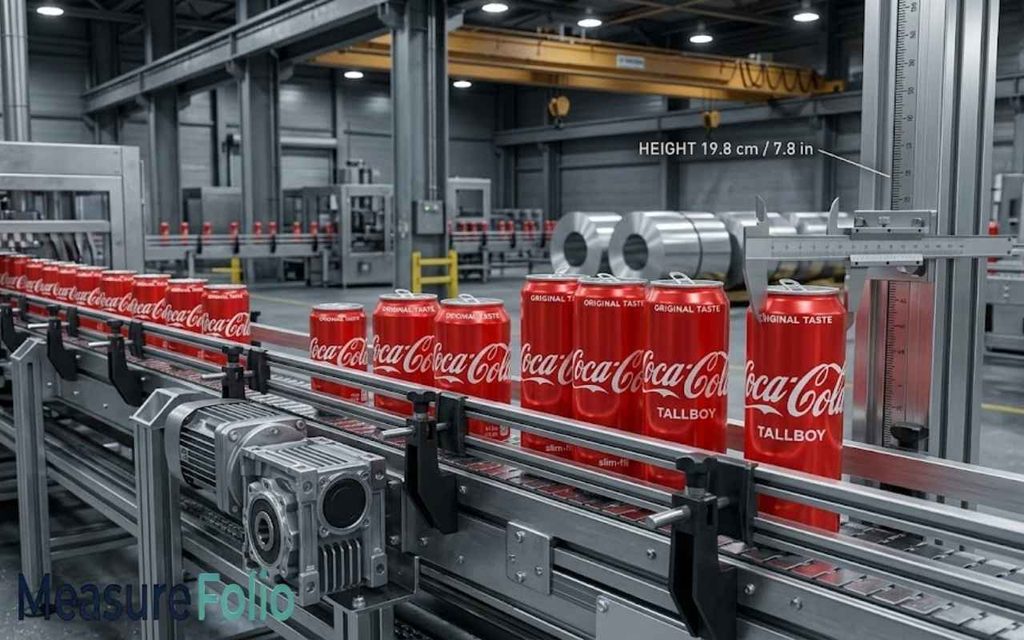
Precision isn’t optional in can manufacturing. Every Coke can diameter and height measurement has to fall within a tolerance of about ±0.003 inches. That’s tighter than the thickness of a human hair in some spots.
Why does it matter so much? A few reasons:
- Stacking and shipping — Cans need to nest perfectly in cases and on pallets. A standard pallet holds roughly 7,680 cans, and even a tiny size variation multiplied across that many units could throw off the whole load.
- Vending machines — Machines are calibrated to a specific can diameter. Too wide, and it jams. Too narrow, and it won’t dispense correctly.
- Sealing integrity — The rim diameter at the top has to match the lid precisely, or the double seam that seals the can won’t hold pressure.
Manufacturers like Crown Holdings, one of the largest can producers in the world, rely on CAD modeling and constant quality checks to keep every can within spec, batch after batch.
“Every fraction of a millimeter in can design affects everything from filling speed to shelf stability,” is a sentiment echoed across the aluminum packaging industry, where engineering tolerance is treated as seriously as taste testing.
Coke Can Sizes Around the World
Not every country drinks Coke out of the same size can. Here’s a quick regional comparison:
| Region | Standard Size | Height | Diameter |
|---|---|---|---|
| United States | 12 oz (355 mL) | 4.83″ | 2.6″ |
| Europe (UK, EU) | 330 mL (11.2 oz) | 4.75″ | 2.6″ |
| Australia | 375 mL (12.7 oz) | 4.96″ | 2.6″ |
| Japan | ~350 mL | ~4.8″ | 2.6″ |
The metric system drives most international sizing, which explains why European and Australian cans list volume in milliliters instead of ounces. Japan’s can sizes land close to the US standard, but you’ll notice slight differences depending on the exact bottler.
How the Coke Can Has Changed Shape Since 1886

Coca-Cola started in glass bottles, not cans. The switch to metal packaging didn’t happen until the 1950s, when steel cans entered the market. Aluminum took over by the late 1950s and early 1960s because it was lighter, cheaper to ship, and easier to recycle.
Some key shifts worth knowing:
- 1960s: The pull-tab was introduced, changing how the can top diameter and opening mechanism worked.
- 1980s: The stay-on tab replaced the removable pull-tab, reducing litter and injury from discarded tabs.
- 1990s–2010s: Wall thickness dropped significantly as lightweighting techniques improved. Engineers shaved off roughly 30% of the material once used in older cans, while keeping strength the same.
- 2010s–2020s: The sleek can and slim Coke can formats gained popularity, driven partly by the energy drink boom and partly by brands wanting a more modern look on shelves.
This evolution shows just how much thought goes into something as simple-looking as a soda can.
Coke Can vs. Other Soda & Beer Cans — How the Numbers Compare

Coke’s dimensions aren’t wildly different from competitors, but small variations exist:
| Brand | Size | Height | Diameter |
|---|---|---|---|
| Coca-Cola | 12 oz | 4.83″ | 2.6″ |
| Pepsi | 12 oz | 4.83″ | 2.6″ |
| Red Bull | 8.4 oz | 4.96″ | 2.06″ |
| Budweiser | 12 oz | 4.83″ | 2.6″ |
Most beverage can dimensions across the soda industry follow the same body and lid diameter simply because manufacturers share the same filling and sealing equipment. Energy drinks like Red Bull break from this pattern because they use a slim can shape by default rather than as a specialty option.
Real-World Reasons People Look Up Can Dimensions
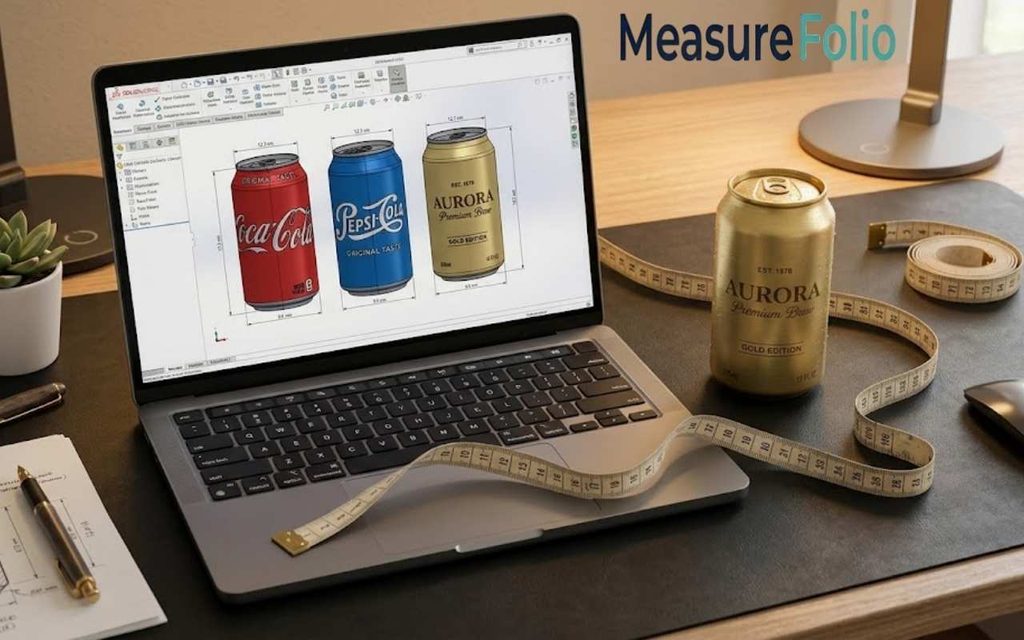
People search for soda can specs for more reasons than trivia. Common use cases include:
- Packaging and shipping calculations — box designers need exact can measurements to avoid wasted space
- 3D modeling and CAD work — designers building product mockups or ads need accurate proportions
- Vending machine calibration — owners need the right can diameter for the mechanism to work properly
- Fridge and cooler planning — a standard shelf fits about 8–10 cans upright or up to 14 lying sideways
- School and DIY projects — crafters often need precise can width and height for builds or repurposing projects
Lesser-Known Details About the Coke Can’s Design

A few facts that don’t come up often but are genuinely interesting:
- The 202 end size and 204 end size are industry codes referring to the lid’s exact diameter, standardized across most North American can makers.
- Roughly 70% of the aluminum used in a new can today can come from recycled material, and a can can go from recycling bin to store shelf in as little as 60 days.
- The dome-shaped bottom isn’t just for looks. It helps the can resist the internal pressure pushing outward and prevents buckling when cans are stacked.
- Mini cans saw a sales jump of around 20% after their 2009 introduction, largely thanks to demand for portion control options.
quick quiz about coke can
Think you know the material? Put your knowledge to the test with our quick quiz below.
1. What is the height of a standard 12 oz Coke can?
A) 4.2 inches
B) 4.83 inches
C) 6.125 inches
D) 6.2 inches
2. What volume does a European standard Coke can hold?
A) 355 mL
B) 375 mL
C) 330 mL
D) 473 mL
3. What is the lid diameter (202 end size) shared across most Coke can sizes?
A) 2.6 inches
B) 2.13 inches
C) 2.06 inches
D) 2.87 inches
4. Which manufacturing process creates the narrower lid opening on a Coke can?
A) Drawing and ironing
B) Necking
C) Lightweighting
D) Double seaming
5. Approximately how many cans fit on a standard shipping pallet?
A) 2,400 cans
B) 5,000 cans
C) 7,680 cans
D) 10,000 cans
Answer Key:
- B) 4.83 inches
- C) 330 mL
- C) 2.06 inches
- B) Necking
- C) 7,680 cans
Test Yourself: Guess the Can Size
Before you go, take a quick guess: without looking back at the table, can you recall the height difference between a standard can and a slim can? (Hint: it’s more than an inch.) Scroll back up and see how close you got.
Final Thoughts
Behind every Coca-Cola can dimension is a mix of engineering, cost-cutting, and decades of trial and error. From the mini can’s compact 4.2 inches to the tallboy’s 6.2-inch stretch, every size serves a specific purpose, whether that’s portion control, convenience, or shelf appeal. Next time you crack open a can, you’ll know exactly what you’re holding — down to the millimeter.
FAQs about coke can
Got questions? We’ve got answers — check out the most common ones below.
1. How much does an empty Coke can weigh compared to a full one?
An empty standard 12 oz Coke can weighs about 0.5 ounces (roughly 14 grams), while a full can weighs close to 13 ounces once you factor in the liquid. That’s a weight difference of over 25 times, which is why aluminum was such a game-changer for shipping costs compared to old-school glass bottles.
2. Can you fit a standard Coke can in a normal cup holder?
Yes, and it’s not by accident. Most car cup holders are designed around the 2.6-inch body diameter of a standard can, since that size became the unofficial industry benchmark decades ago. Slim cans and tallboys also fit most cup holders since their diameters stay close to the standard, even though their height changes.
3. Why does the top of a Coke can feel thinner than the sides?
The lid diameter and the metal used there are intentionally thinner than the can’s body. Engineers reduce material at the top through the necking process to cut aluminum costs, but they compensate with a slightly thicker gauge right at the seam to keep the seal pressure-tight.
4. How many Coke cans fit in a standard case or pallet?
A typical case holds 24 cans, and a full pallet can hold around 7,680 cans when stacked and shrink-wrapped for shipping. That number depends on case size and pallet dimensions, but it’s the industry standard most bottlers work with.
5. Do all Coke can sizes use the same lid, or does it change with the can size?
Interestingly, most Coke can sizes, from the mini to the tallboy, share the same 202 lid diameter of about 2.06 inches. Manufacturers keep the lid size consistent across formats so the same sealing and filling equipment can handle multiple can sizes without retooling the production line.

I’m Adam Davis, your go-to author for all things related to dimensions here at Measure Folio. I believe that understanding size, scale, and space shouldn’t be complicated. My goal is to break down complex dimensional concepts into clear, actionable articles so you can stop guessing and start planning with absolute certainty.